
Traceability
BLOG
Vinay Nagendra - Founder
4/21/2026
One of the key markers separating a good manufacturer from a great one is their focus on processes & practices to ensure Traceability across their products, raw material & in-process components’ inventories, and the path a material takes in undergoing the series of transformations that convert it to a finished product.
Given that all industries do not put the same premium on end-to-end Traceability, as they may not need to, it is still a practice that is critical to not only ensuring fulfilment of a customer’s specification criteria, but more importantly in my view - for two very valuable purposes.
First, to have a solid dataset of properties & parameters – be it chemical, mechanical, electrical or any other that influence the final product. It is to say that, at least in a majority of cases, the composition of the constituent material and parts has a direct correlation to the service life of the final product & its performance in the function it is designed for. Having this dataset helps designers learn what works best, purchasing teams to maintain a consistent procurement policy and the organization overall to keep shipping out industry-leading products they can be proud of.
Second, to perform root cause analyses of any defects that might occur in the final product – either on the production floor or during its service life.
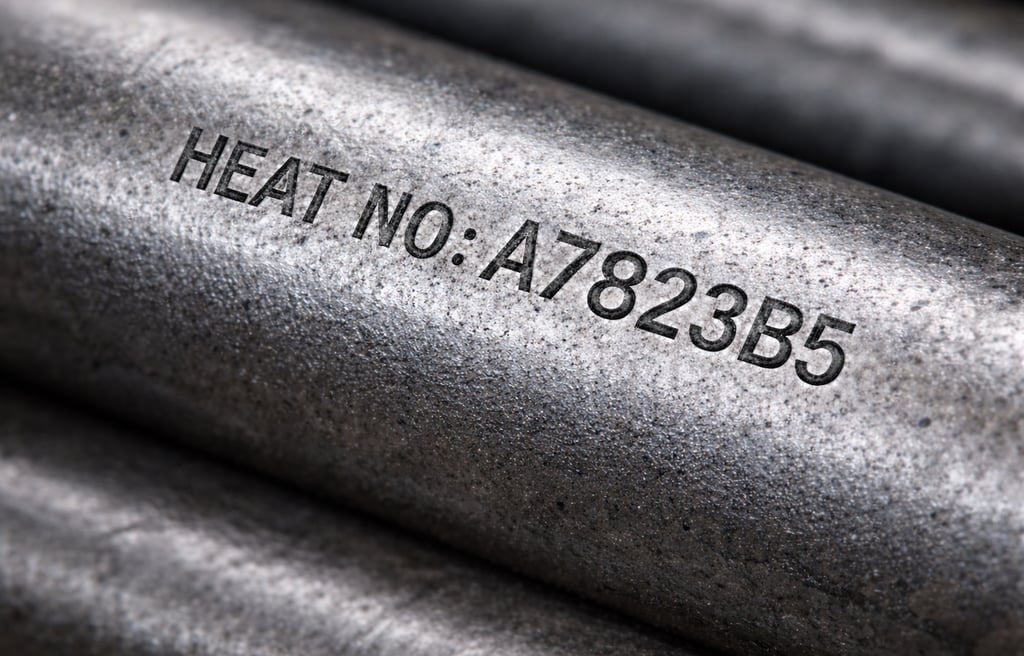
Valve manufacturers, and more specifically those that cater to the oil & gas industry, face a critical challenge in capturing heat numbers at the point of raw material receipts, recording the chemical composition & mechanical properties and then having to ensure Traceability until a complete valve is assembled, and a Material Test Certificate (MTC) is compiled. Heat number is a familiar term for any manufacturer who deals with metals and metal products. No two heat numbers are ever alike, they are unique identifiers for every batch of metal products produced, akin to VINs in automobiles.
An important part of my responsibilities working at the Toyota group was auditing the processes of our manufacturing partners – who made products ranging from air compressors to complex automotive navigation systems. As pioneers in establishing some of the best practices in manufacturing, the focus on establishing Traceability was understandably obsessive – yet the solutions were beautiful in their simplicity and ease of implementation. Simple, but foolproof. This simplicity in design is not just an approach but a mentality that I have tried to deeply ingrain myself, our organization and our products with.


Traceability Simplified
Right from the conception of GatorPAS, Traceability is a feature that has been designed as an intrinsic yet subliminal function – stringing the pearls of information right from a customer’s requirement specification, to procurement charters, to material receipt, inventory management, part & assembly job cards to material test certificates for the final assembled product.
Learn how GatorPAS helps manufacturers capture key parameters of components, and generate Material Test Certificates (MTC) automatically.
Explore GatorPAS
Explore how GatorPAS can streamline your manufacturing operations.